


01
Precision Machining

We turn mission-critical components for robotics, including shafts, bushings, collars, spacers, sleeves, and precision round housings, with tight tolerances, responsive quoting, and engineering support from prototype through production.
Robotic systems depend on components that perform consistently under repeated motion. Our CNC turning services are designed to deliver the fit, finish, and dimensional stability required for those applications.
We machine custom turned parts such as shafts, bushings, collars, spacers, sleeves, and precision round housings, supporting both prototype development and production orders with responsive communication and engineering review.


We machine turned robot components with the dimensional consistency needed for parts that move, rotate, and mate repeatedly in real-world applications.

When your design changes, we help you move quickly from revision to revised part, reducing delays during development and testing.

Our process is built to keep dimensions, concentricity, and surface quality consistent from prototype runs to repeat production orders.

From early-stage builds to ongoing procurement, we support a smooth transition into stable, repeatable production for custom robotic components.
Custom CNC turned parts for robotic systems, including drive shafts, bushings, collars, spacers, sleeves, housings, and structural components built for prototyping and production.


At RobotCNCParts, we machine aluminum alloys such as 2024, 6061, and 7075 for lightweight robot structural parts, housings, connectors, and joints that require corrosion resistance and strength.

We machine brass grades like C360 and C260 for robotic connectors, threaded inserts, bushings, and sensor fittings where low friction, electrical conductivity, and excellent machinability are critical.

RobotCNCParts machines copper materials such as C110 for robotic heat sinks, electrical contacts, and connectors that require high thermal and electrical conductivity, along with corrosion resistance.

We specialize in machining stainless steel grades 303, 304, and 316 for durable robot arm joints, shafts, and structural components requiring corrosion and wear resistance in demanding environments.

RobotCNCParts machines alloy steels like 4140 and carbon steels such as 1018 to produce high-strength robotic drive shafts, gears, and linkages that require toughness and impact resistance.

We machine titanium grade 5 (Ti-6Al-4V) for lightweight, high-performance robotic joints, actuators, and aerospace-grade components demanding an exceptional strength-to-weight ratio and corrosion resistance.

RobotCNCParts machines ABS for lightweight, impact-resistant robot covers, enclosures, and non-structural robot parts where cost-effective material with good toughness and surface finish is needed.

We specialize in machining Delrin 150 and similar grades for robot gears, bushings, and sliding components that require high stiffness, low friction, and excellent dimensional stability.

RobotCNCParts machines Nylon 6 and Nylon 66 for abrasion-resistant, lightweight robotic pulleys, spacers, and cable guides designed to withstand wear and mechanical stress.

We machine unfilled and glass-filled PEEK for high-load robotic bearings, insulators, and joint components that demand excellent heat resistance, chemical stability, and wear resistance.

RobotCNCParts machines polycarbonate, such as Lexan, for impact-resistant sensor covers, light shields, and protective housings in robots needing transparency and toughness.

We machine virgin and filled PTFE for low-friction robotic seals, insulators, and sliding components, providing excellent chemical resistance and reduced wear in demanding applications.
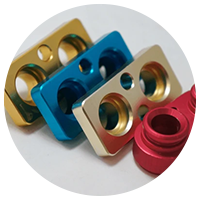
This electrochemical process enhances corrosion resistance and surface hardness, ensuring durability for aluminum robotic frames and structural components.
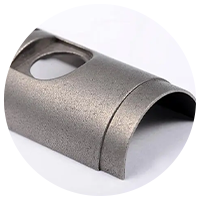
Creates a uniform matte finish by removing surface imperfections, providing a non-reflective, professional appearance for external robotic shells.
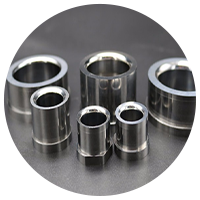
Achieves a high-gloss, ultra-smooth surface to minimize friction and prevent debris accumulation on precision robotic contact points.
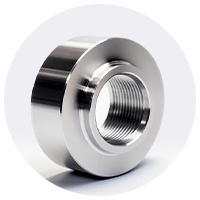
A chemical treatment that removes surface iron from stainless steel, maximizing chemical resistance for robots in harsh environments.
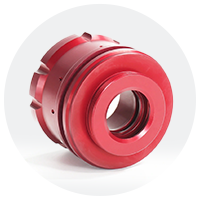
Delivers a thick, impact-resistant protective layer available in various colors, shielding robotic parts from heavy wear and abrasion.
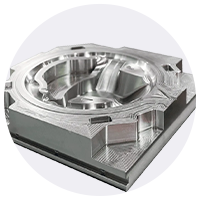
Removes microscopic peaks to create a sterile, friction-reduced surface, essential for medical or cleanroom robotic manipulation systems.
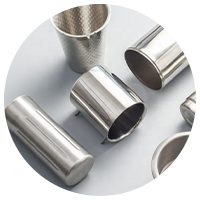
Provides excellent wear resistance and electrical conductivity, making it ideal for robotic joints and internal electronic connector housings.
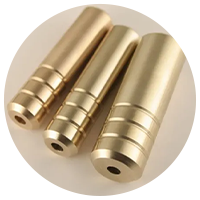
Offers a cost-effective corrosion barrier while maintaining electrical conductivity, perfect for grounding aluminum components within robotic assemblies.


"Honestly, I was ready to lose my mind with the last supplier over the robot arm joints. But your team nailed the tolerances this time. Still took a week for shipping to UK, but the part quality is top-notch. Cheers."


"Surface finish on the robot housing looks great. Usually, rapid prototyping looks like trash, but these are clean. A bit pricey for small batch, but I guess you get what you pay for. No more sanding for me!"


"The AL6061 brackets arrived today. Measurements are spot on. My boss was stressing about the lead time, but you guys delivered faster than expected. Solid work, keep it up."


"Finally a chassis that doesn't need re-drilling. Material is sturdy, feels like it’ll actually hold the motor weight. Wish the packaging was less bulky, but the parts are perfect. Thanks."

Get answers about our CNC turning capabilities, quality standards, and delivery support for robotic components.


